ELECTRICAL
Hazard description
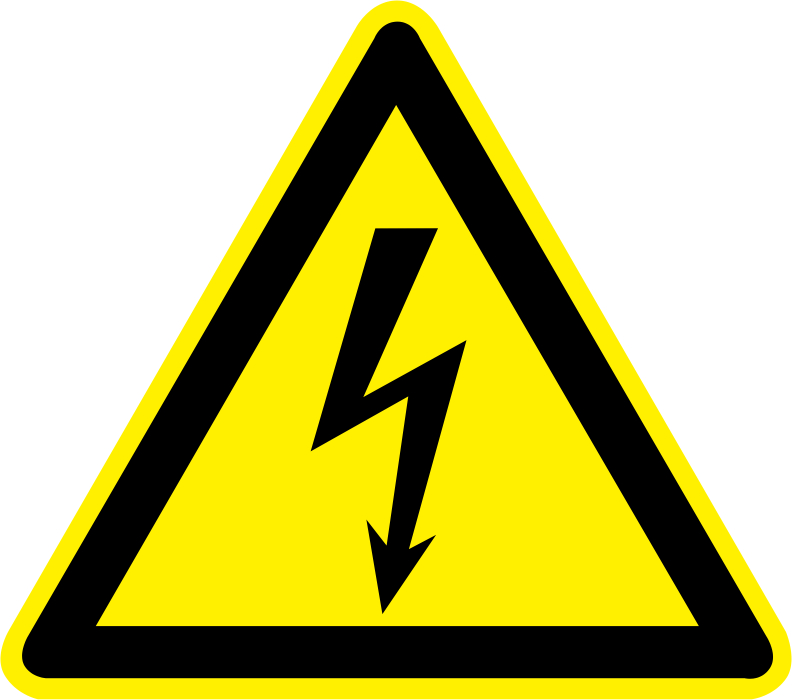
Electricity is present everywhere at CERN with a large range of voltage and current. In CERN’s research facilities, some electrical components are supplied with thousands of volts and thousands of amperes.
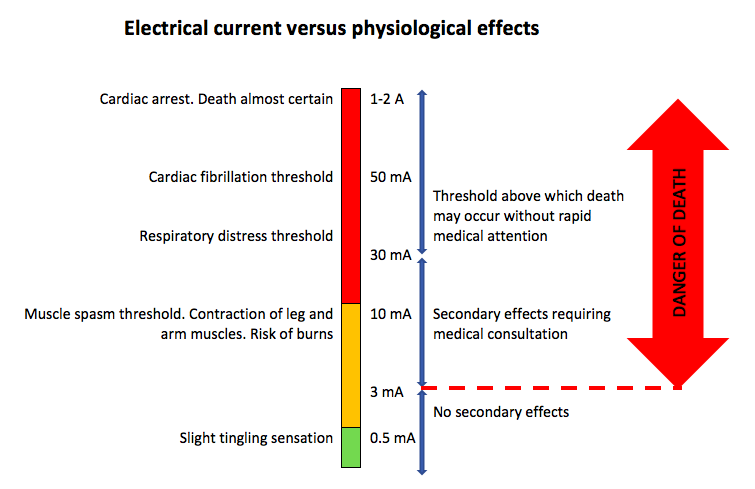
Electric shock is defined as the physiological reaction or injury caused by electric current passing through the human body, irrespective of the voltage level.
Electrocution is death caused by electrical shock.
Shocks can be caused by:
- direct contact: contact with a live electrical circuit, either directly or via a tool
- indirect contact: contact with an exposed conductive part that is not normally live but has become live due to insulation failure.
The severity depends of:
- the amount of current flowing through the body
- the current’s path through the body
- the length of time the body remains in the circuit
- the current’s frequency
Electrical hazards expose the workers to the following:
- Arc: emits heat, projections of molten material and intense light that causes burns
- Burns: electrical, arc flash, or thermal contact
- Electrocution
- Explosions: ignition of explosive material in air by electricity
- Fire
- Shock
When an electric current passes through the human body it causes instantaneous effects as well as side-effects that can manifest themselves at a later stage.
IN CASE OF ACCIDENT OR INCIDENT CALL FIRE & RESCUE SERVICE (74444) OR MEDICAL SERVICE (73186) TO OBTAIN MEDICAL ADVICES
Contact
Prevention and Protection
Appropriate behaviours:
- Turn power off before connecting electrical equipment to the power supply
- Don’t use defective equipment or alter electrical devices/equipment: ELECTRICAL EQUIPMENTS NEED TO BE VISUALLY INSPECTED BEFORE USE!
- Don’t plug too many items into a single socket (OVERHEAT)
- Stay away from electrical equipment and installation when they are in operation
Electrical Safety inspections
According to Safety Instruction IS4: Safety Inspections, Departments are responsible for ensuring the initial and periodic Safety inspections of all facilities under their authority, including Electrical equipments/installations.
Electrical Safety inspections are carried out by HSE Unit and allow to ensure the safety of the installations.
Electrical reports are available on:
- EDMS and attached to the building number
- SAILOR Safety reporting
Emergency Stops
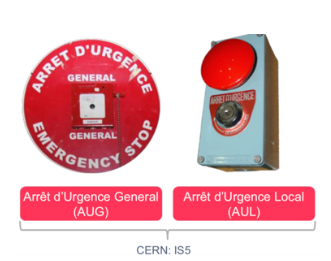
Two types of Emergency Stops are present at CERN:
- Local Emergency Stop (AUL): cut-offs premises without issuing a Level 3 Alarm
- General Emergency Stop (AUG): general cut-offs issuing a Level 3 Alarm
The AULs or AUGs goal is to cut off the power of potential hazardous equipment.
According to Safety Instruction IS5: Emergency Stops, “Any person shall be authorised and required to activate an emergency stop whenever he or she considers that a dangerous situation is in imminent danger of happening, actually exists, or is in the process of occurring.”
The AULs shall be tested at least once a year by the TSO responsible for the premises where they are installed.
CERN Safety Rules
The CERN Safety documents concerning the electrical hazards are the following:
- Safety Instruction (IS):
- Safety Code C1: Electrical Safety Code
- Safety Guideline:
- Safety procedures:
- CERN templates to be obligatorily uses for electrical works and/or non-electrical works in the vicinity of electrical equipment
- Work Permit (Electrical Safety):
- General and non-LHC : EDMS 2170622
- LHC-specific: EDMS 2170623
- Work Permit (Electrical Safety):
- CERN templates to be obligatorily uses for electrical works and/or non-electrical works in the vicinity of electrical equipment
Evaluation of training needs
The evaluation of training needs must be determined by the Group Leader for every employee who could potentially be exposed to an electrical hazard.
Guideline HSE (EDMS 1332559): Evaluation of Training Needs for “Preparation Electrical Accreditation”
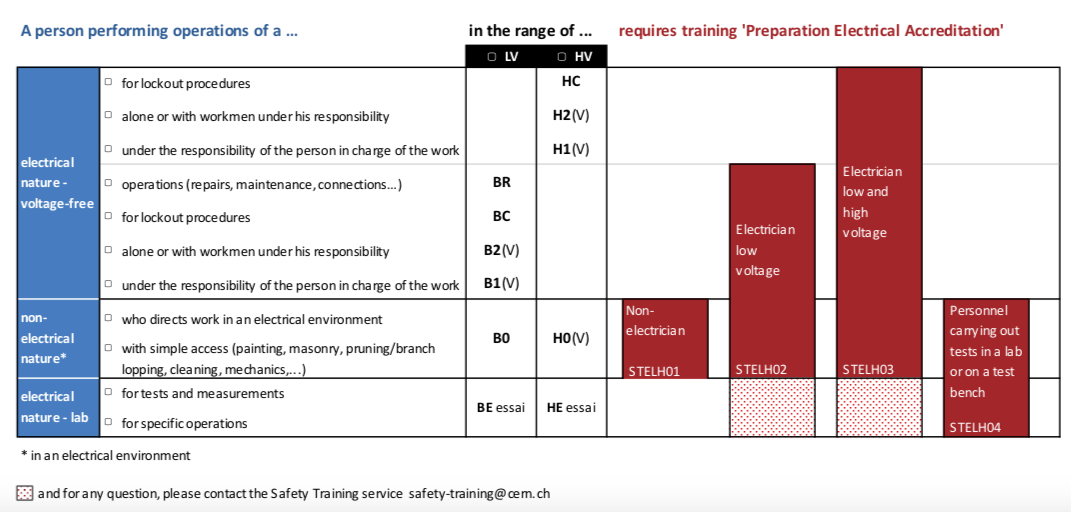
Training courses
On the CERN’s Learning Hub: